
Korean Veggie Bibimbap Bowls Recipe
Introduction
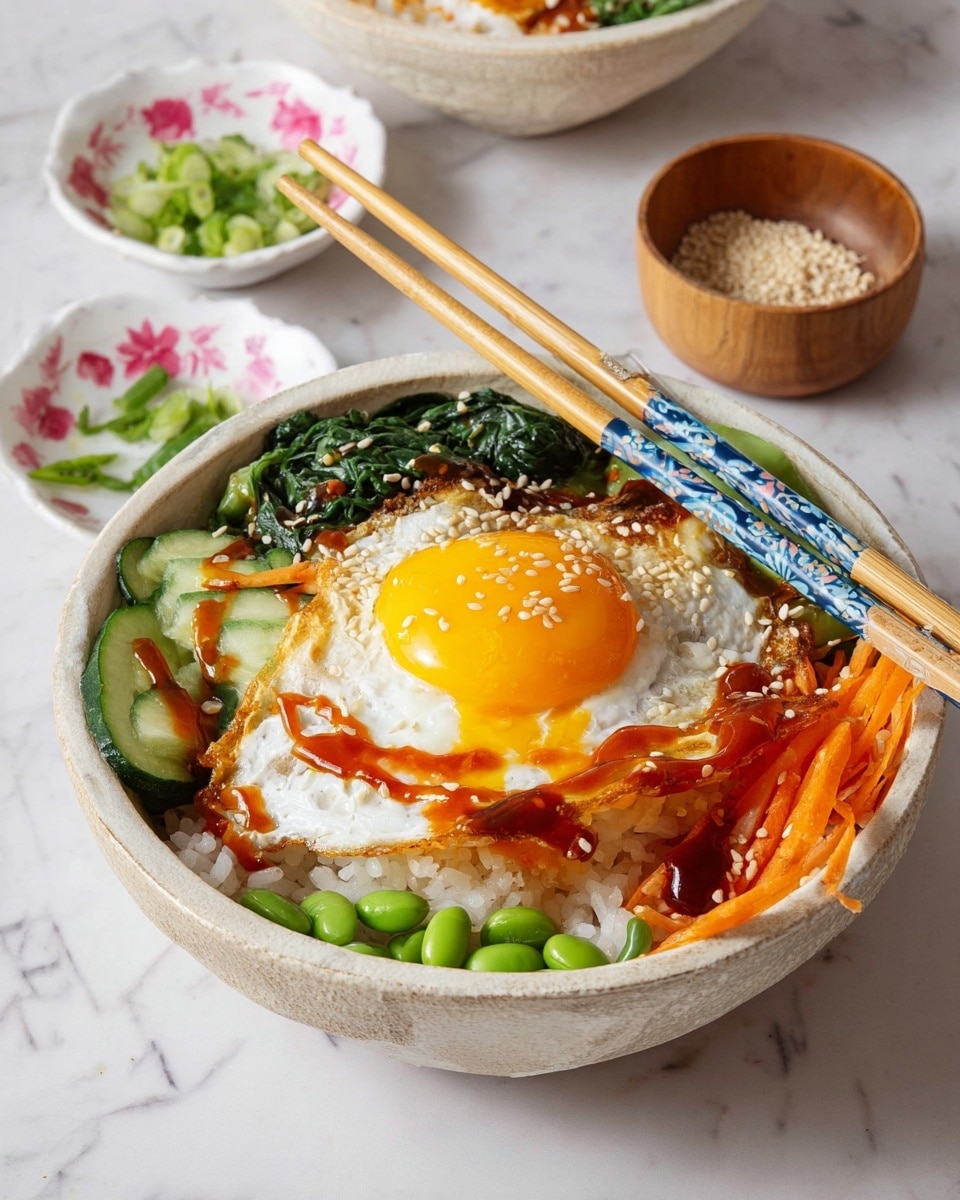
Korean Veggie Bibimbap Bowls are a colorful, nutritious meal that’s full of vibrant flavors and textures. This dish combines warm rice, fresh vegetables, a runny fried egg, and spicy gochujang sauce for a satisfying bowl that’s easy to assemble and delicious to eat.
Ingredients
- 4 cups cooked short-grain white rice
- 4 eggs
- 1 cup baby spinach
- 1 cup shredded carrots
- 1 cup edamame (cooked)
- 1 small cucumber (thinly sliced)
- 2 tbsp sesame oil
- 4 tbsp gochujang (Korean chili paste)
- 1 tbsp soy sauce
- 1 tsp toasted sesame seeds
- Salt (to taste)
Instructions
- Step 1: Sauté the spinach in a little sesame oil with a pinch of salt until it wilts, then set it aside.
- Step 2: In the same pan, cook the shredded carrots for 1–2 minutes to retain some crispness.
- Step 3: Keep the cucumber raw for freshness, and ensure the edamame is cooked or thawed if frozen.
- Step 4: Heat a splash of oil in a pan and fry the eggs sunny-side-up, keeping the yolks runny for mixing into the rice.
- Step 5: Divide the cooked rice into four bowls.
- Step 6: Top each bowl with small piles of spinach, carrots, cucumber, edamame, and place a fried egg in the center.
- Step 7: Drizzle each bowl with about a tablespoon of gochujang and a little soy sauce.
- Step 8: Sprinkle with toasted sesame seeds and add a few drops of sesame oil.
- Step 9: Mix everything together well before eating to enjoy the full flavor blend.
Tips & Variations
- Swap edamame for cooked mushrooms or zucchini if preferred.
- For extra protein, add grilled chicken or tofu slices to the bowl.
- Adjust the amount of gochujang to control the spice level to your taste.
- Use brown rice or quinoa instead of white rice for a healthier twist.
Storage
Store any leftover components separately in airtight containers in the refrigerator for up to 2 days. When ready to eat, reheat the rice and vegetables gently in the microwave or on the stove, then add a freshly fried egg and sauce for the best texture and flavor.
How to Serve
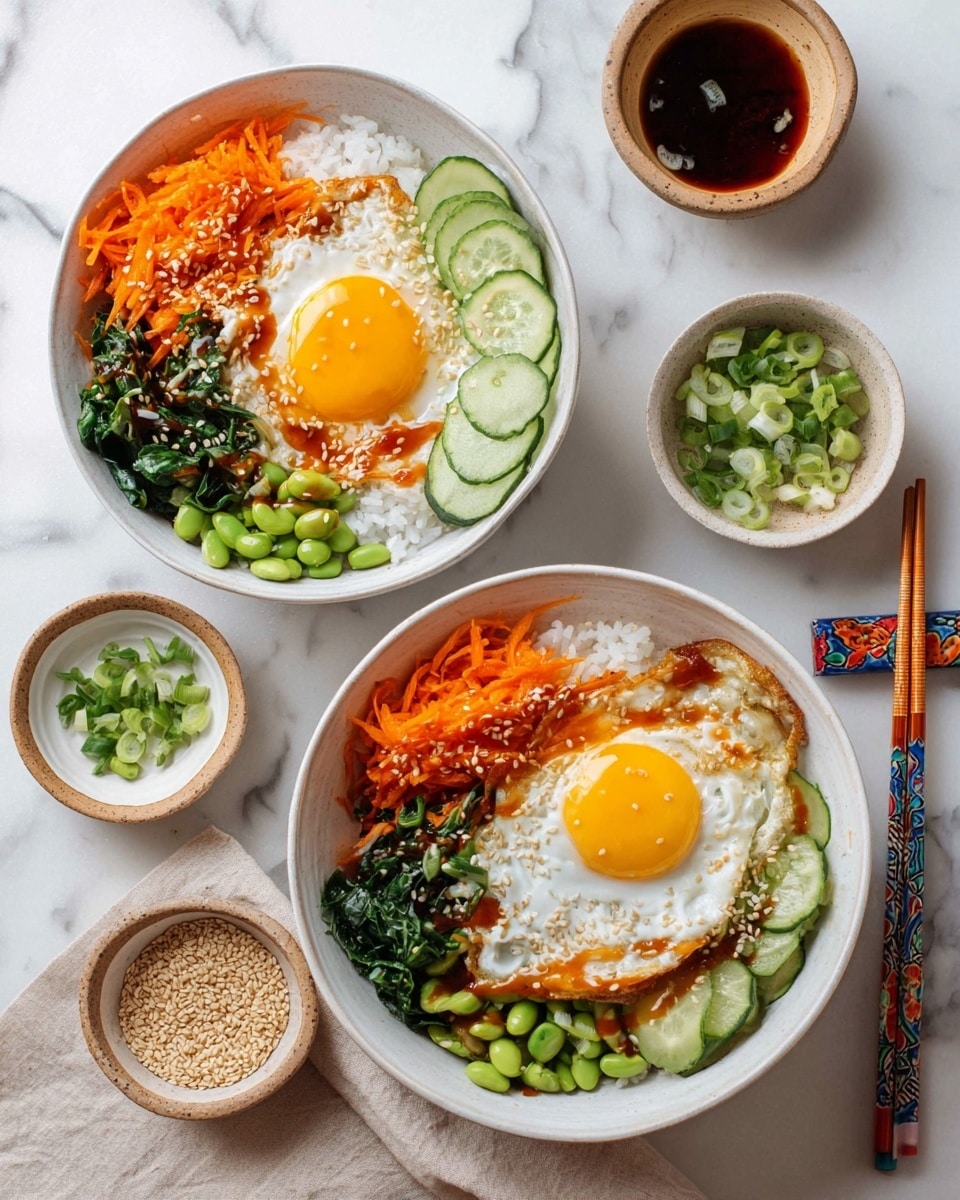
Serve this delicious recipe with your favorite sides.
FAQs
Can I make bibimbap vegan?
Yes, simply omit the egg and replace the gochujang with a vegan-friendly version. You can add marinated tofu or tempeh for extra protein.
Is it necessary to use short-grain rice?
Short-grain rice is ideal because it’s sticky and holds the bowl components well, but medium-grain rice can also work if that’s what you have on hand.
PrintKorean Veggie Bibimbap Bowls Recipe

A vibrant and healthy Korean Veggie Bibimbap Bowl featuring sautéed spinach, crisp carrots, fresh cucumber, cooked edamame, and a runny fried egg on a bed of warm short-grain white rice. Topped with spicy gochujang sauce, soy sauce, sesame oil, and toasted sesame seeds for a deliciously balanced meal bursting with flavor and texture.
- Prep Time: 10 minutes
- Cook Time: 15 minutes
- Total Time: 25 minutes
- Yield: 4 servings 1x
- Category: Main Dish
- Method: Frying
- Cuisine: Korean
- Diet: Vegetarian
Ingredients
Rice and Eggs
- 4 cups cooked short-grain white rice
- 4 eggs
Vegetables
- 1 cup baby spinach
- 1 cup shredded carrots
- 1 cup edamame (cooked)
- 1 small cucumber (thinly sliced)
Sauces and Seasonings
- 2 tbsp sesame oil
- 4 tbsp gochujang (Korean chili paste)
- 1 tbsp soy sauce
- 1 tsp toasted sesame seeds
- Salt (to taste)
Instructions
- Cook the Spinach: Heat a small amount of sesame oil in a pan, add the baby spinach with a pinch of salt, and sauté just until the spinach wilts. Remove from heat and set aside.
- Sauté the Carrots: In the same pan, add the shredded carrots and cook for 1 to 2 minutes over medium heat to keep them slightly crisp. Remove and set aside.
- Prepare the Cucumber and Edamame: Keep the thinly sliced cucumber raw for freshness. Ensure the edamame is cooked or properly thawed if using frozen.
- Fry the Eggs: Heat a splash of oil in a pan and fry the eggs sunny-side-up, keeping the yolks runny for mixing into the rice later.
- Assemble the Bowls: Divide the cooked short-grain white rice evenly into four bowls. Arrange sautéed spinach, sautéed carrots, fresh cucumber slices, cooked edamame, and place the fried egg in the center of each bowl.
- Add Sauce and Garnish: Drizzle about one tablespoon of gochujang and a little soy sauce over each bowl. Finish with a sprinkle of toasted sesame seeds and a few drops of sesame oil.
- Mix and Serve: Before eating, thoroughly mix all ingredients together to create a harmonious blend of flavors and textures. Enjoy your Korean Veggie Bibimbap Bowl!
Notes
- For a vegan or egg-free version, omit the fried egg and consider adding tofu or mushrooms for protein.
- Adjust the amount of gochujang to your spice preference.
- Use fresh sesame seeds for toasting if available to enhance the aroma.
- Short-grain rice works best for authentic texture, but you can substitute with medium-grain rice if necessary.
- If you prefer softer vegetables, sauté the carrots longer, but be mindful to keep some crunch.
Keywords: Korean bibimbap, veggie bibimbap, Korean rice bowl, gochujang bowl, vegetarian Korean dish, fried egg rice bowl