
Sourdough French Bread in a Dutch Oven Recipe
Introduction
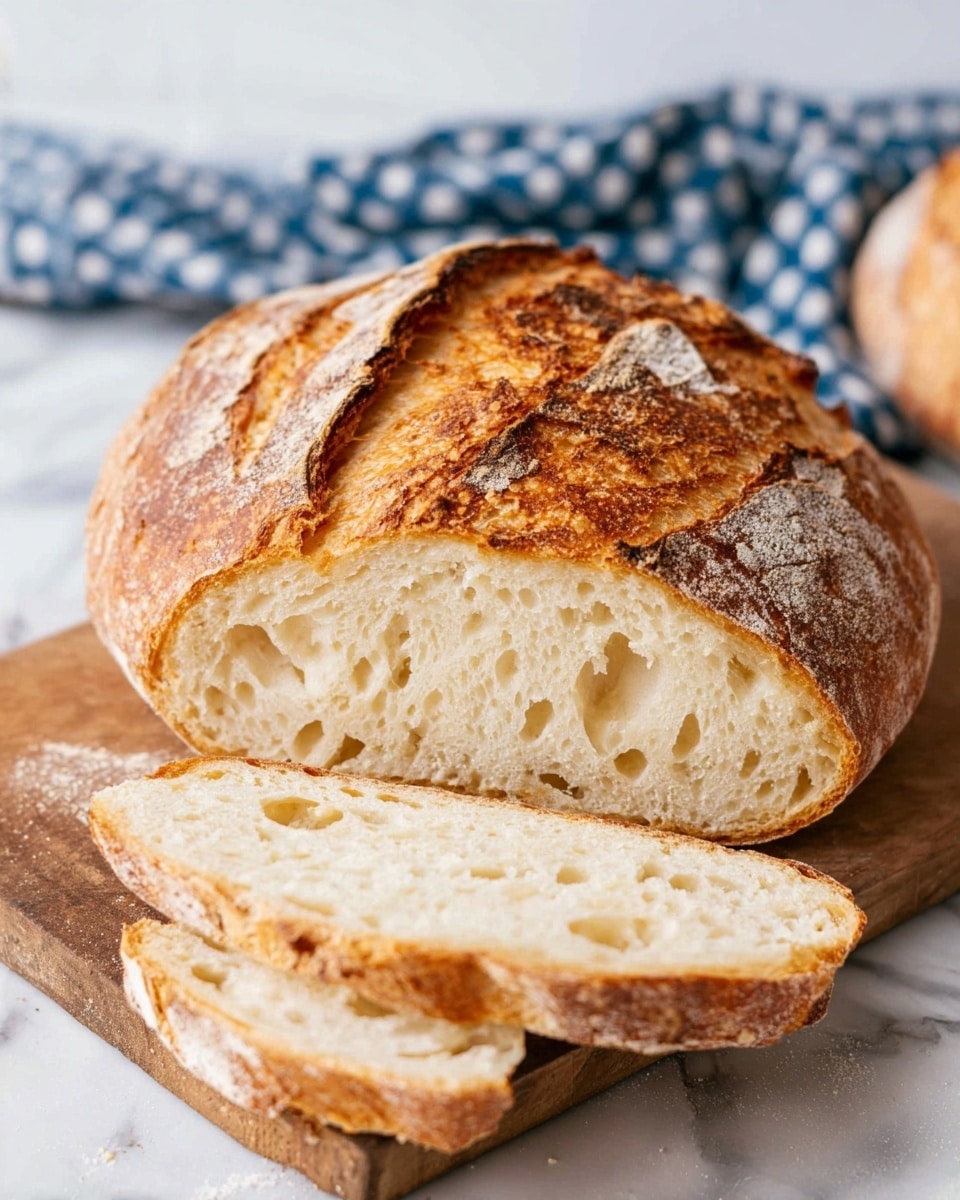
Discover how to make a rustic sourdough French bread with a crisp crust and tender crumb using a Dutch oven. This recipe harnesses the natural fermentation of sourdough starter for rich flavor and beautiful texture.
Ingredients
- 3 ¼ cups bread flour
- 1 ⅛ cups water
- ½ cup active sourdough starter (100% hydration)
- 2 teaspoons salt
- Pinch cornmeal for dusting parchment
Instructions
- Step 1: The night before baking, feed your sourdough starter so it’s active and bubbly by morning.
- Step 2: In a large bowl, combine the water and active starter. Add the bread flour and mix until no dry flour remains. Cover and rest for 30 minutes.
- Step 3: Add salt to the dough and mix until well combined. The dough will feel slightly sticky but should clear the sides of the bowl.
- Step 4: Over the next 2 hours, perform 4 sets of stretch and folds, spaced 30 minutes apart. Keep the dough covered between folds.
- Step 5: Let the dough rise at room temperature for 4-6 hours until doubled in size and bubbly.
- Step 6: Turn the dough onto a lightly floured surface and gently shape it into a round by folding the edges underneath. Place seam-side-up in a bowl dusted with flour and lined with a clean kitchen towel.
- Step 7: Cover the bowl and refrigerate the dough overnight for 8-14 hours.
- Step 8: Preheat your oven to 450°F (230°C) with a Dutch oven inside. Line a sheet of parchment paper with cornmeal.
- Step 9: Turn the cold dough onto the prepared parchment. Dust the top lightly with flour and use a sharp knife to make slashes on the surface.
- Step 10: Carefully lower the dough on the parchment into the hot Dutch oven. Cover and bake for 20 minutes. Then remove the lid and bake for an additional 15-20 minutes until the crust is deeply golden brown.
- Step 11: Remove the bread and cool completely on a wire rack before slicing.
Tips & Variations
- Use bread flour for better gluten development and a chewier texture.
- Make sure your sourdough starter is active and bubbly before beginning to ensure good rise.
- Feel free to add herbs like rosemary or thyme to the dough for an aromatic twist.
- If you don’t have a Dutch oven, bake the loaf on a preheated baking stone and place a pan of water in the oven to create steam.
Storage
Store the bread wrapped in a clean kitchen towel or paper bag at room temperature for up to 3 days. For longer storage, slice and freeze the bread in an airtight bag. Reheat slices in a toaster or oven to restore crispness.
How to Serve
Serve this delicious recipe with your favorite sides.
FAQs
Can I use all-purpose flour instead of bread flour?
Yes, but bread flour is preferred for its higher protein content, which helps create better structure and chewiness. All-purpose flour may result in a softer crumb.
Why do we refrigerate the dough overnight?
Refrigeration slows fermentation, allowing flavor to develop more deeply and making the dough easier to handle for shaping.
PrintSourdough French Bread in a Dutch Oven Recipe

This Sourdough French Bread recipe uses a classic fermentation process and baking in a Dutch oven to create a crusty, flavorful loaf with a tender crumb. The dough is mixed, folded, fermented overnight, and then baked at a high temperature to develop a beautiful golden crust and airy interior, perfect for sandwiches, toast, or enjoying with butter.
- Prep Time: 3 hours 30 minutes (includes 2 hours folding/rest plus initial mixing and shaping)
- Cook Time: 35-40 minutes
- Total Time: 12-15 hours (including overnight fermentation and chilling)
- Yield: 1 loaf (about 1.5 lbs) 1x
- Category: Bread
- Method: Baking
- Cuisine: French
Ingredients
For the Dough
- 3 ¼ cups bread flour
- 1 ⅛ cups water
- ½ cup active sourdough starter (100% hydration)
- 2 teaspoons salt
For Baking
- Pinch cornmeal for dusting parchment paper
Instructions
- Feed starter: The night before baking, feed your sourdough starter so it becomes active and bubbly by the next morning, ensuring proper fermentation.
- Mix dough: In a large bowl, combine the water and active starter. Add the bread flour and mix until no dry flour remains. Cover the bowl and let it rest for 30 minutes to allow the flour to hydrate.
- Add salt: Sprinkle in the salt and mix well until fully incorporated. The dough will feel slightly sticky but should pull away from the sides of the bowl.
- Stretch and fold: Over the next 2 hours, perform 4 sets of stretch and folds, spaced 30 minutes apart, to develop gluten structure. Keep the dough covered between folds to prevent drying out.
- Bulk rise: Let the dough rise at room temperature for 4 to 6 hours until it doubles in size and becomes bubbly, indicating active fermentation.
- Shape dough: Turn the dough out onto a lightly floured surface. Gently fold the edges under to form a round boule shape. Place seam-side-up in a bowl dusted with flour and lined with a clean kitchen towel.
- Refrigerate: Cover the dough and refrigerate overnight for 8 to 14 hours to improve flavor and make handling easier.
- Preheat oven: Preheat your oven to 450°F (230°C) with a Dutch oven inside to heat up thoroughly. Line a sheet of parchment paper with a pinch of cornmeal to prevent sticking.
- Prepare dough for baking: Carefully turn the cold dough onto the prepared parchment paper. Dust the top lightly with flour and make several slashes on the surface with a sharp knife to allow the bread to expand while baking.
- Bake covered: Lift the dough along with the parchment paper and place it into the hot Dutch oven. Cover with the lid and bake for 20 minutes, which traps steam to create a crisp crust.
- Finish baking uncovered: Remove the lid and bake for an additional 15 to 20 minutes until the bread develops a deep golden brown crust.
- Cool bread: Transfer the loaf to a wire rack and allow it to cool completely before slicing to maintain bread structure and flavor.
Notes
- Ensure your sourdough starter is active and bubbly before starting to get the best rise.
- Performing the stretch and folds gently but thoroughly helps develop gluten for a better crumb.
- Chilling the dough overnight enhances flavor and makes the dough easier to handle.
- Be cautious when handling the hot Dutch oven to avoid burns.
- Letting the bread cool completely is essential to set the crumb and prevent sogginess.
Keywords: Sourdough, French bread, Dutch oven, artisan bread, homemade bread, fermented dough